Customer feedback comes from surveys, reviews, support conversations, product usage, social media, and many other channels.
The challenge is not only collecting feedback. Teams must decide where to focus, how to assign ownership, and how to turn insight into action.
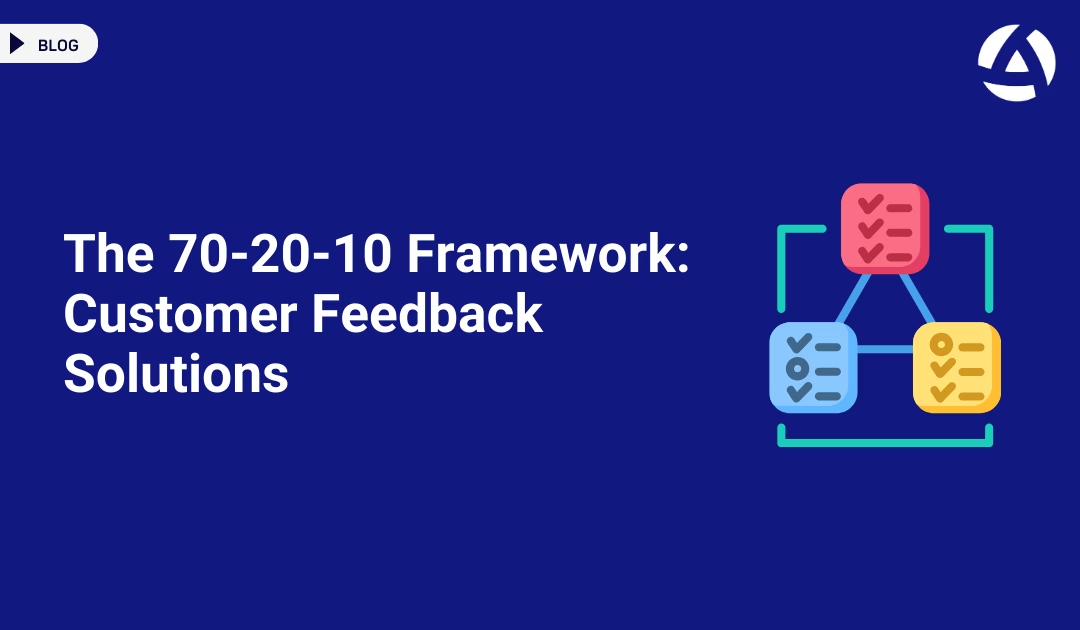
The 70-20-10 Framework at a Glance
- 70% for ongoing operational feedback
- 20% for relationship measurement
- 10% for future-focused feedback
What Is the 70-20-10 Feedback Framework?
The framework is a practical way to balance different feedback needs.
70%: Operational Feedback
Most effort should support day-to-day improvement.
- Transactional surveys
- Support interactions
- Product usage data
- Reviews and complaints
- Journey and service metrics
20%: Relationship Measurement
This layer tracks the wider relationship between the customer and the brand.
- NPS
- Brand perception
- Long-term satisfaction
- Loyalty and retention indicators
10%: Future-Focused Feedback
This smaller share supports innovation and long-term planning.
- Concept testing
- Beta feedback
- Product research
- Customer advisory programs
The exact allocation may vary by organization. The value of the framework is the balance it creates between current operations, customer relationships, and future needs.
The Customer Feedback Maturity Model
- Collection: The organization gathers customer data.
- Analysis: Teams identify patterns and recurring issues.
- Action: Insights trigger tasks and workflows.
- Prediction: Models estimate future behavior and risk.
- Optimization: Processes improve continuously based on feedback.
Many teams collect and report feedback but struggle to connect it with action.
Use More Than Surveys and Reviews
- Behavioral signals, such as product usage and drop-off
- Support language, which can reveal frustration and urgency
- Social engagement patterns, which can show early sentiment shifts
- Purchase hesitation, such as cart abandonment
- Feature engagement decline, which may signal usability or value problems
Create Cross-Functional Ownership
Feedback loses value when it stays within one department.
A RACI model can clarify ownership:
- Responsible: The team completing the work
- Accountable: The owner of the result
- Consulted: Teams that provide input
- Informed: Stakeholders who need updates
Plan for the Full Cost of Feedback Programs
Software is only one part of the investment.
- Data integration
- Training
- Analysis resources
- Customer participation incentives
- Process design
- Change management
Close the Post-Collection Gap
The most common problem is not data collection. It is the failure to act after an insight appears.
- Assign a clear owner
- Set a due date
- Define the expected outcome
- Track progress in a shared dashboard
- Measure whether the action improved the experience
Create a Feedback Flywheel
- Customers provide feedback.
- Teams analyze and prioritize it.
- The organization makes improvements.
- Customers see that feedback leads to action.
- Customers become more willing to provide useful feedback again.
Conclusion
Customer feedback software is most valuable when it connects insight with ownership and action.
The 70-20-10 framework helps organizations balance operational needs, relationship measurement, and future planning. The exact percentages are less important than maintaining that balance.
Frequently Asked Questions
What's the biggest mistake companies make when implementing customer feedback solutions?
The most common mistake is focusing too heavily on collection while neglecting action. Many organizations invest in sophisticated feedback platforms but fail to establish clear ownership for implementing changes based on insights gathered. Without accountability structures that connect feedback to specific improvement initiatives, even the most advanced customer feedback solutions become expensive listening posts that don’t drive business value.
How quickly should companies expect to see ROI from new customer feedback solutions?
While some quick wins typically emerge within 30-60 days, particularly around service recovery opportunities, the full value of customer feedback solutions generally materializes over 9-12 months. This timeline allows for collection of baseline metrics, implementation of process improvements, and measurement of impact across multiple business cycles. Organizations that rush to judge ROI prematurely often abandon programs just as they’re beginning to generate significant returns. The most successful implementations establish phase-based success metrics tied to both feedback quality improvements and business outcomes.