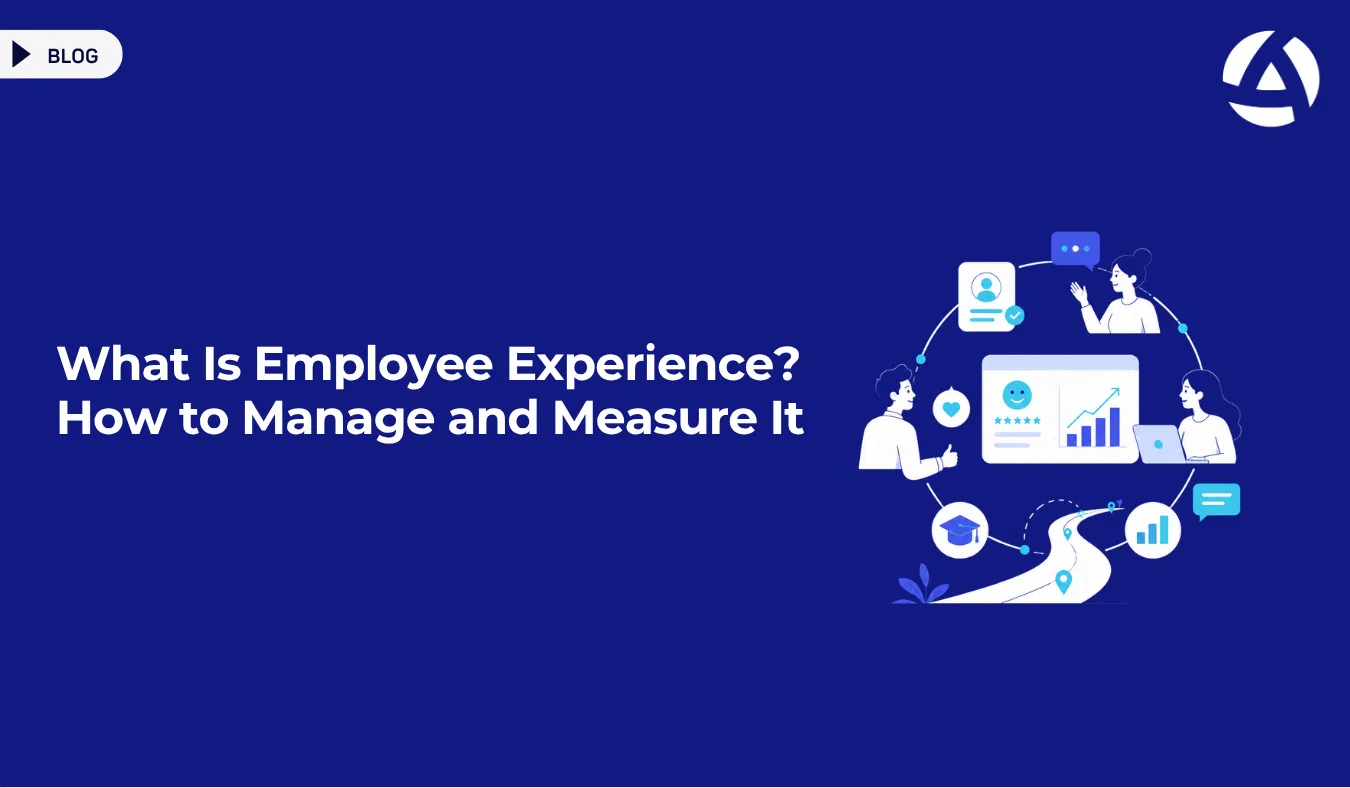
What Is Employee Experience? How to Manage and Measure It
Employee experience is the sum of the perceptions and emotions formed by every interaction an employee has with a company, from candidacy through departure. Recruitment, onboarding, communication with managers, workplace technology, career opportunities, company culture, and offboarding are all parts of the employee experience.
A strong employee experience does more than improve how people feel at work. It can also influence employee engagement, talent retention, productivity, company culture, and the experience delivered to customers.
In this guide, we examine what employee experience means, the stages of the employee journey, how employee experience can be managed and measured, and how employee feedback can be turned into action.
What Is Employee Experience?
Employee experience, often abbreviated as EX, refers to the overall perception employees form across every touchpoint they have with an organization.
This experience is not limited to compensation, benefits, or the physical workplace. Communication with managers, digital tools, company culture, workload, career opportunities, recognition, and the extent to which employee views are taken into account also shape the employee experience.
Employee experience should be viewed not as a single human resources initiative, but as the outcome of the employee's end-to-end relationship with the company. Different teams, roles, locations, and tenure groups within the same organization may have very different experiences.
McKinsey's research on employee experience emphasizes that the relationship employees form with their organization is shaped across social relationships, the work itself, and the organization, and that these experiences can change throughout the employee journey.
For this reason, relying only on company-wide averages can cause the problems experienced by specific employee groups to remain hidden.
Why Does Employee Experience Matter?
Employee experience matters because employees' attitudes toward their work, teams, and organization are shaped by what they experience every day.
When employees feel heard, supported, and valued, they may participate more fully in their work. Negative experiences, on the other hand, can gradually contribute to lower motivation, weaker engagement, and a greater likelihood of leaving.
Effective employee experience management supports the following areas:
- Employee engagement: Helps employees build a stronger connection with their work and the organization's goals.
- Talent retention: Makes it easier to identify issues that may increase attrition risk before they become more serious.
- Performance and productivity: Helps reveal processes, tools, and communication problems that make it harder for employees to do their jobs.
- Company culture: Strengthens the alignment between stated organizational values and employees' daily experiences.
- Customer experience: Helps employees deliver more consistent service by giving them access to the right information, support, and decision-making authority.
- Change management: Makes it easier to understand employee expectations and concerns related to organizational change.
Improving employee experience does not mean continuously demanding more performance from employees. The goal is to create a fair, safe, and sustainable work environment that makes it easier for people to contribute.
What Does Research Say About Employee Experience?
Employee experience is a broad concept, and no single study can explain every relationship involved. However, research on employee engagement, psychological safety, and the employee lifecycle helps illustrate the areas in which experience moves together with business outcomes.
Engagement and business outcomes
Gallup's 11th Q12 meta-analysis examined data from 347 organizations, 53 industries, and 183,806 business units. Employee engagement was associated with all 11 performance outcomes included in the research.
When top-quartile and bottom-quartile units were compared, median differences included 23% in profitability, 18% in sales productivity, 51% in employee turnover for low-turnover organizations, and 78% in absenteeism. These findings show associations and should not be interpreted as proof of causation on their own.
Psychological safety and learning
Amy Edmondson's multi-method field study defined psychological safety as a shared belief among team members that the team is safe for interpersonal risk-taking.
The research found an association between psychological safety and team learning behavior. This helps explain why employees' ability to ask questions, report mistakes, and share their views without fear is an important part of employee experience.
One annual survey is not enough
Employee experience is shaped across candidacy, onboarding, development, day-to-day work, and departure. The touchpoints and problems within each stage can differ considerably.
For this reason, broad engagement surveys should be supported by journey-based measurements at critical moments such as onboarding, role changes, manager changes, and offboarding.
The Difference Between Employee Experience, Employee Satisfaction, and Employee Engagement
Employee experience, employee satisfaction, and employee engagement are related concepts, but they do not mean the same thing.
| Concept | What does it describe? | Core question |
|---|---|---|
| Employee experience | Covers every interaction an employee has with the company and the perceptions created by those interactions. | What does the employee experience throughout the relationship with the company? |
| Employee satisfaction | Shows the extent to which an employee is satisfied with current working conditions and the work environment. | Is the employee satisfied with current conditions? |
| Employee engagement | Refers to an employee's mental and emotional involvement in their work, team, and organizational goals. | Does the employee want to contribute and remain with the organization? |
An employee may be satisfied with current working conditions without feeling strongly connected to the organization's goals. Similarly, a highly engaged employee may lose motivation after prolonged negative experiences.
Instead of monitoring satisfaction or engagement scores alone, organizations need to understand the employee experiences behind those scores.
Core Elements That Shape Employee Experience
Employee experience cannot be created through a single initiative or human resources policy. The different factors that influence employees' daily work lives need to be considered together.
Company Culture and Leadership
Company values, leadership behavior, and decision-making processes form the foundation of employee experience. A culture in which employees can safely share ideas, learn from mistakes, and understand how decisions are made supports engagement. Foundational research on psychological safety found an association between environments where team members feel safe taking interpersonal risks and learning behavior.
The Manager-Employee Relationship
Employees' perceptions of the organization are shaped to a large extent by their direct experience with managers. Regular feedback, open communication, fair distribution of work, and support for development are central parts of this relationship.
The Physical and Digital Work Environment
Office conditions, remote work arrangements, software, and access to information all affect how easily employees can perform their roles. Complex processes and inadequate technology can create significant friction in the daily employee experience.
Recognition and Rewards
Employees want to feel that their contributions are seen and evaluated fairly. Recognition should be timely, specific, and connected to the contribution being recognized.
Career and Development Opportunities
Training, mentoring programs, internal opportunities, and visible career paths help employees see a future within the organization. Limited development opportunities can weaken engagement and talent retention.
Workload and Employee Well-Being
Unrealistic goals, persistent overtime, and a lack of respect for rest boundaries can contribute to burnout over time. Supporting employee well-being means more than offering benefits. It also requires designing work and workloads in a sustainable way.
Stages of the Employee Journey
The employee journey shows how an employee's relationship with the organization develops over time. The names and number of stages may vary between companies. What matters is evaluating employee experiences end to end at the most critical touchpoints.
1. Candidacy and Recruitment
Employee experience begins before the first day of work. The clarity of the job posting, application process, interviews, communication speed, and the way an offer is presented all contribute to a candidate's first impression of the company.
The experience of candidates who are not hired can also affect the employer brand. For this reason, organizations may evaluate feedback from all candidates, not only those who join.
2. Onboarding
Onboarding is the period in which a new employee learns about their role, team, company culture, and the systems they will use. Missing information, unclear responsibilities, or delayed access to essential tools can damage the experience within the first few weeks.
Feedback collected after onboarding can be used to identify the processes new employees struggle with most and improve the experience for future hires.
3. Day-to-Day Work and Performance
The processes, technologies, and collaboration methods employees use to complete their work form the core of the daily experience. Clear roles and expectations, access to necessary information, and regular feedback all support performance.
4. Learning and Career Development
Opportunities to build new skills and progress within the organization are important for long-term engagement. Development needs should be discussed not only during annual performance reviews, but also in regular one-to-one conversations.
5. Engagement and Retention
At this stage, organizations evaluate employees' engagement, motivation, and expectations for the future. Declines in engagement scores, changes in open-ended feedback, and team-level issues may provide early warning signals.
For a broader perspective on employee experience and disengagement, read our Employee Experience: The “EX” Factor article.
6. Offboarding and the Alumni Experience
Exit interviews are an important source of feedback for understanding the problems employees experienced within the organization. However, learning about issues only when someone leaves may be too late for meaningful intervention.
A respectful, organized, and transparent offboarding process influences the employee's final impression of the company and future perceptions of the employer brand.
How to Manage Employee Experience
Employee experience management is the process of continuously collecting feedback across the employee journey, analyzing and prioritizing it, and turning it into improvement actions.
1. Map the Employee Journey
Identify the employee journey from candidacy to departure and define the critical moments within it. Onboarding, role changes, promotions, manager changes, organizational transformation, and offboarding can significantly affect the employee experience.
Remember that different employee groups may have different needs within the same journey. Experience can vary by location, role, tenure, working model, and department.
2. Listen to Feedback Continuously
Annual employee engagement surveys may show the broad direction, but they are often not enough to reveal rapid changes or problems within specific journeys.
Annual surveys can be supported with the following feedback methods:
- Pulse surveys
- Onboarding and offboarding surveys
- eNPS measurements
- Open-ended employee comments
- One-to-one conversations
- Employee support tickets
- Digital suggestion and feedback channels
3. Analyze the Reasons Behind the Scores
A decline in employee engagement or eNPS does not explain the underlying problem on its own. Open-ended comments need to be analyzed to understand the root causes behind score changes.
For example, a low engagement score may be linked to compensation, manager communication, workload, career opportunities, or workplace technology. Analyzing comments by topic, sentiment, and employee segment helps direct action to the right area.
4. Evaluate Employee Groups Separately
Company-wide averages can hide serious problems within individual teams. Examine results by department, location, role, tenure, manager, and stage of the employee journey.
This makes it possible to develop improvement plans for the needs of different employee groups instead of applying the same program across the entire organization.
5. Prioritize Actions
Not every issue can be resolved at the same time. Evaluate problems according to their impact on employees, frequency, feasibility, and organizational priorities.
Separate issues that can be solved quickly from those that require longer-term transformation.
6. Close the Feedback Loop
Collecting employee opinions without explaining what happens next can erode trust. At the end of the process, explain what was learned, which decisions were made, and which improvements were implemented.
A “we listened and made these changes” approach helps employees see that their views matter and can support participation in future research.
7. Involve Managers in the Process
Employee experience is not a program that can be managed by a central human resources team alone. Managers need access to relevant results, the ability to understand issues within their teams, and a clear way to follow action plans.
Supporting managers in active listening, feedback, psychological safety, and team development makes it easier to integrate employee experience into everyday management.
How to Measure Employee Experience
Employee experience should not be measured with a single score. eNPS, employee engagement and satisfaction scores, journey-based surveys, open-ended feedback, and operational indicators should be evaluated together.
| Measurement method | What does it show? | How should it be used? |
|---|---|---|
| eNPS | Shows employees' willingness to recommend the company as a place to work. | Use it to track change over time and combine it with open-ended questions to understand the reasons behind the score. |
| Engagement and satisfaction scores | Measure employees' relationship with their work, managers, teams, and organization. | Evaluate them not only at company level, but also by team, role, location, and tenure. |
| Journey-based experience scores | Show the experience within specific processes such as candidacy, onboarding, training, promotion, or offboarding. | Use them to identify problems at a specific touchpoint. |
| Open-ended employee feedback | Explains the topics, expectations, and emotions behind numerical scores. | Analyze it by topic, sentiment, employee group, and change over time. |
| Operational indicators | Show outcomes such as employee turnover, absenteeism, training participation, and movement into internal roles. | Review them alongside employee feedback to evaluate possible relationships. |
eNPS is an employee-context adaptation of the Net Promoter Score calculation described by Bain. The percentage of respondents who select 9 or 10 is reduced by the percentage selecting 0 through 6. However, a single recommendation score does not explain why employees feel the way they do.
A decline in eNPS may indicate a problem, but it does not reveal whether the issue comes from workload, manager communication, or career opportunities. Scores should therefore always be evaluated together with employees' own words.
How Does Employee Experience Affect Customer Experience?
Employee experience affects the quality, speed, and consistency of the service delivered to customers. When employees lack the right information, processes, tools, or decision-making authority, customer experience problems can follow.
- Service quality: Access to the right information and support helps employees resolve customer problems more quickly.
- Knowledge and capability: Employees who receive training and development can provide customers with more accurate and consistent information.
- Service continuity: High employee turnover can cause organizational knowledge to be lost and require customers to interact with different people repeatedly.
- Improvement ideas: Employees who communicate directly with customers often observe process problems and customer expectations at close range.
For this reason, employee experience and customer experience should not be managed independently. A recurring customer complaint may be rooted in the systems, processes, or organizational structure employees rely on.
Evaluating employee and customer feedback together can reveal not only the customer-facing outcome of a service problem, but also its underlying causes inside the organization.
The Role of Technology in Employee Experience
Employee feedback may exist across surveys, intranets, mobile applications, email, human resources systems, support tickets, and external review platforms.
Evaluating these data sources separately can make it difficult to identify common problems across the organization. A Voice of Employee platform can bring feedback from different sources into one structure and make end-to-end employee experience analysis easier.
Employee experience technology can support the following areas:
- Automatically collecting feedback across different employee journeys
- Reaching employees through mobile, email, SMS, and internal channels
- Tracking eNPS and other employee experience scores
- Analyzing open-ended comments by topic and sentiment
- Comparing the experiences of different employee groups
- Creating real-time alerts for critical scores and topics
- Tracking actions and feedback loops
Technology alone does not create a strong employee experience. When combined with the right data collection, analysis, and action processes, however, it can help organizations identify problems earlier and base decisions on employee insight.
The Alterna CX Perspective: How We Read Employee Experience Data
Alterna CX does not reduce employee experience to a single survey score. The goal is to bring signals from different channels together in the context of the employee journey, employee groups, and business outcomes so the reasons behind the scores become visible.
More Than 10 Feedback Channels
Employee signals from email, SMS, in-app, web, kiosk or QR, WhatsApp, Slack or Teams, intranet, help desk, and external review platforms can be brought together within the same analysis structure.
From Score to Root Cause
eNPS and engagement scores can be read together with topic, sentiment, intent, experience driver, employee segment, and journey stage. This makes it possible to investigate whether a low score is related to compensation, workload, manager communication, or workplace tools.
An Evidence-Backed Insight Chain
The analysis is designed to create a traceable evidence chain from an executive-level KPI to the relevant theme and the anonymized employee comments supporting it.
Segment and Journey Comparison
The same topic may have different effects across roles, functions, locations, tenure groups, or employee journey stages such as onboarding and offboarding. These comparisons make groups that fall below the overall average visible.
Internal and External Signals Together
Internal surveys and support tickets can be reviewed alongside external platforms such as Glassdoor and Indeed to identify possible perception gaps between the employer brand and the internal employee experience.
From Insight to Action
Alerts and tasks can be created for critical scores, themes, or increases in anomalies. After improvements are implemented, the same signals can be measured again to track change.
Original Research Outputs That Can Be Produced with Alterna CX Data
- The topics and experience drivers with the greatest impact on employee engagement
- Differences between feedback from employees in onboarding and employees with longer tenure
- The experience areas that differ most by role, location, or function
- Perception gaps between internal employee feedback and external employer reviews
- Changes in topic, sentiment, and scores before and after a specific action
- Recurring language and theme patterns that accompany quiet quitting or attrition risk
Rather than presenting a single average employee experience score, these outputs are intended to show which employee group, at which stage of the journey, and for what reason requires action.
Explore the Alterna CX Voice of Employee data and analytics approach
Employee Experience Management with Alterna CX
The Alterna CX Voice of Employee solution supports the collection, analysis, and activation of employee feedback from different touchpoints.
Trusted by Leading Brands










- Listen: Collect data from surveys, employee comments, and multiple feedback channels.
- Unify: Bring employee signals from different sources together in one place.
- Analyze: Examine open-ended comments by topic, sentiment, employee group, and journey stage.
- Prioritize: Identify the factors with the greatest impact on engagement, satisfaction, and employee experience scores.
- Act: Route critical topics to the relevant teams, track actions, and measure change again.
Journey-Based Measurement
Automated feedback flows can be created at specific stages of the employee journey, including candidate experience, onboarding, training, role changes, and offboarding. Results can be analyzed by employee group and journey stage.
Pulse Surveys
Short and targeted surveys can be conducted around organizational changes, working models, training, or current employee needs.
Text Analytics
Open-ended comments from surveys and other employee feedback channels can be analyzed automatically. Organizations can identify the topics employees discuss, how they feel about those topics, and which issues are increasing over time.
Root Cause Analysis
Employee experience scores and open-ended feedback can be evaluated together to examine the factors with the greatest impact on engagement, satisfaction, and recommendation scores.
Alerts and Action Management
Alerts and tasks can be created for the relevant teams when a score falls below a defined threshold or a critical topic appears in employee comments. This helps employee feedback move into action more quickly.
How to Improve Employee Experience
Improving employee experience starts with making problems across the employee journey visible. These problems can then be prioritized according to their impact on employees, frequency, and the feasibility of a solution.
A successful employee experience program combines the following practices:
- Listening to employees continuously instead of relying only on annual surveys
- Analyzing results by team and employee group in addition to company-wide averages
- Evaluating open-ended comments together with numerical scores
- Involving managers in employee experience actions
- Sharing decisions and implemented improvements with employees
- Measuring changes in experience again after actions are taken
Organizations that listen to employees regularly and close the feedback loop can turn employee experience from a score that is merely tracked into a sustainable management approach.
Sources and Methodology Notes
This guide was prepared using the following primary or institutional sources related to employee experience, employee engagement, psychological safety, and measurement methods:
- Gallup, The Relationship Between Engagement at Work and Organizational Outcomes: 11th Q12 meta-analysis, 2024.
- Amy C. Edmondson, Psychological Safety and Learning Behavior in Work Teams: Administrative Science Quarterly, 1999.
- McKinsey & Company, This Time It's Personal: Shaping the New Possible Through Employee Experience: employee experience across social, work, and organizational dimensions and the employee journey.
- Bain & Company, Measuring Your Net Promoter Score: NPS calculation methodology.
- Alterna CX Voice of Employee Platform: employee feedback sources, analysis layers, and action management approach.
Frequently Asked Questions About Employee Experience
What is employee experience?
Employee experience is the sum of the perceptions and emotions formed by all interactions an employee has with a company, from candidacy through departure.
What does EX stand for?
EX stands for Employee Experience. It refers to the overall experience employees have across every interaction and stage of their relationship with an organization.
How is employee experience measured?
Employee experience can be measured by evaluating eNPS, engagement and satisfaction surveys, pulse surveys, journey-based surveys, open-ended employee comments, and operational indicators together.
What is the difference between employee experience and employee engagement?
Employee experience covers every interaction an employee has with the company. Employee engagement refers to an employee's mental and emotional involvement in their work and the organization. Engagement is one possible outcome of employee experience.
How can employee experience be improved?
Mapping the employee journey, collecting feedback regularly, analyzing open-ended comments, identifying team-level issues, and communicating the actions taken can all help improve employee experience.
Who is responsible for employee experience management?
Human resources teams may coordinate the employee experience program. However, senior leadership, people managers, information technology teams, and other functions also shape the daily employee experience.
What does an employee experience platform do?
An employee experience platform helps organizations collect feedback from different channels, analyze results by employee group and journey stage, classify open-ended comments, and track improvement actions.
Why does employee experience affect customer experience?
Employees' access to information, support, appropriate tools, and decision-making authority influences the service they provide to customers. Process and technology problems in the employee experience can therefore also affect customer experience.